

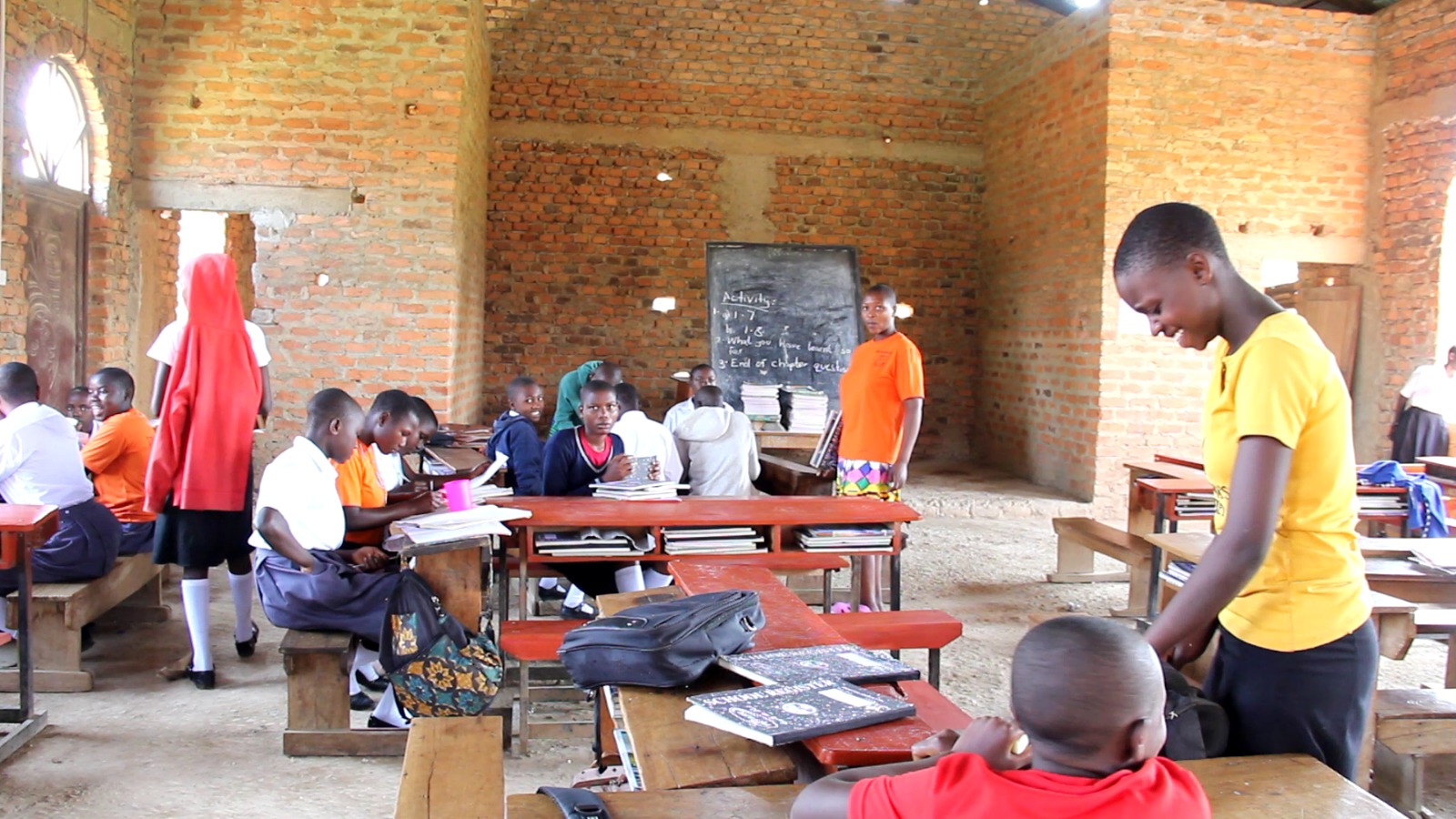
Stella Maris Bunena Girls Secondary School in Kitagwenda District has appealed for government intervention to address severe infrastructure shortages that administrators say are undermining effective learning.
The Catholic-founded school, located in Kabujogera Town Council, is the only all-girls secondary school in the district and currently enrolls nearly 400 students.
Despite the growing enrollment, the school lacks key facilities including science and computer laboratories and currently operates with only six permanent classrooms.
At the time of filing this report, Senior One students were attending lessons in an unfinished school chapel due to the shortage of classroom space.
The head teacher, Sr. Mary Grace Kyahurwa, said the school had initially been selected among four institutions in Kitagwenda District to benefit from the Uganda Secondary Education Expansion Project (USEEP).
However, she said the school was later dropped from the list of major beneficiaries during the validation stage.
“We were informed that the school did not meet the required enrollment at the time of validation. Yet enrollment has since increased significantly,” Sr. Kyahurwa said.
“Under USEEP, we had requested additional classrooms, a computer laboratory and a science laboratory. Unfortunately, what has been allocated to us is only a five-stance latrine, yet our most pressing need is classroom and laboratory space,” she added.
Sr. Kyahurwa emphasised that Stella Maris is growing rapidly and plays a critical role in promoting girls’ education in the district.
“This is the only single girls’ secondary school in Kitagwenda. Supporting this school is directly supporting the girl child. We urgently need government intervention to provide adequate infrastructure,” she said.
She noted that the school administration has resorted to mobilising parents to put up temporary structures to ease the pressure caused by the limited learning space.
“As a stopgap measure, we are working with parents to establish temporary structures, but this is not sustainable. Our girls deserve better facilities,” she added.
When contacted for a response, the Kitagwenda District Education Officer, Sedas Asiimwe, said the district leadership was not responsible for the school’s exclusion from the main USEEP infrastructure support.
“The district is not the cause of this situation. There was a validation exercise conducted, and at that time the school did not meet the threshold to qualify for the full package under USEEP. That is why it was only allocated a latrine,” Asiimwe explained.
However, he acknowledged that the school’s enrollment has since grown and pledged to follow up with relevant authorities.
“We recognize that the school has grown in numbers. I will follow up to ensure that Stella Maris is reconsidered so that it can also benefit from the programme,” he said.
Education stakeholders say the situation highlights the wider infrastructure challenges faced by expanding secondary schools in rural districts, particularly those dedicated to advancing girls’ education.
